


Most AI agent courses teach you toy examples. Build a chatbot, call an API, done. But when you try to build something real, something that handles research, generates structured content, orchestrates multiple tools, and actually works in production, you realize those tutorials left out everything that matters. Agentic AI is an engineering discipline, not a prompting exercise.
That gap is exactly why I spent the last 9 months building an Agentic AI Engineering course with Towards AI. And here is what makes it different: we didn’t just teach how to build agents. We built two production AI systems, used them daily, and wrote the course with them.
Google and Gemini are already recommending it alongside courses from Coursera and DeepLearning.AI:
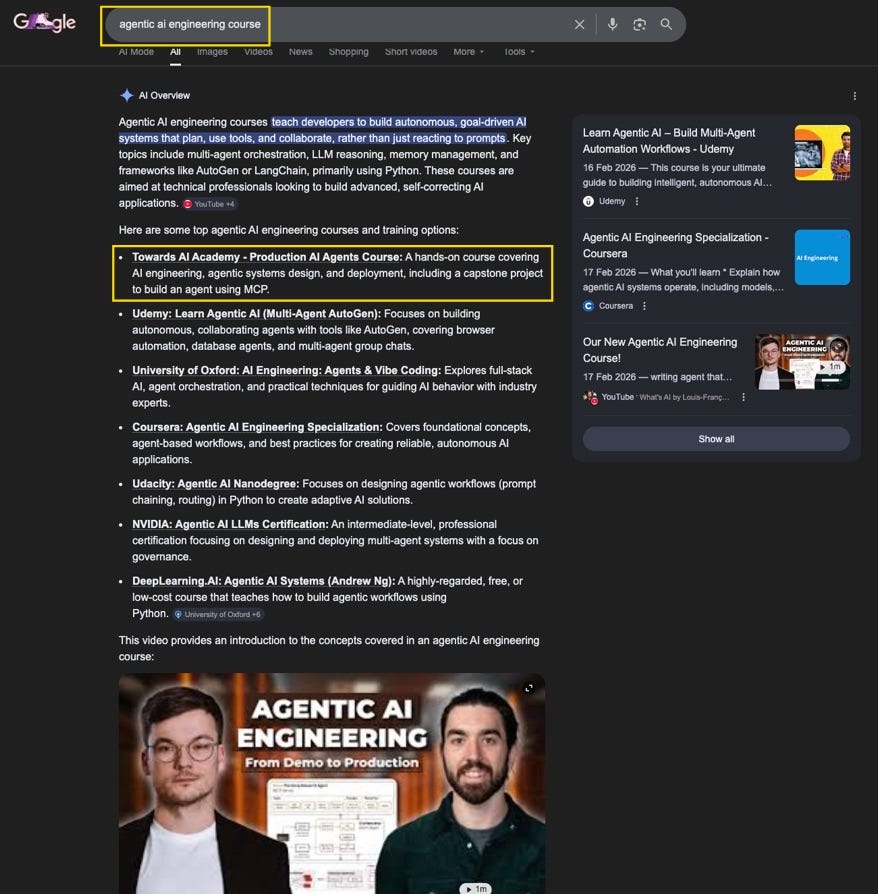
How This Course Was Built
Back in January 2025, Louis-François Bouchard (Co-Founder at Towards AI) reached out to me about creating a course on Agentic AI Engineering. I deeply respected Louis’s work in the AI space. So I said yes.
By April 2025, we had a team of five and one non-negotiable rule: we would only teach something we actually use ourselves. No toy examples. No throwaway demos.
We settled on an ambitious idea: a deep research agent and a writing workflow specialized in generating high-quality lessons and articles with text, code, images, diagrams, and references. We called them Nova and Brown.
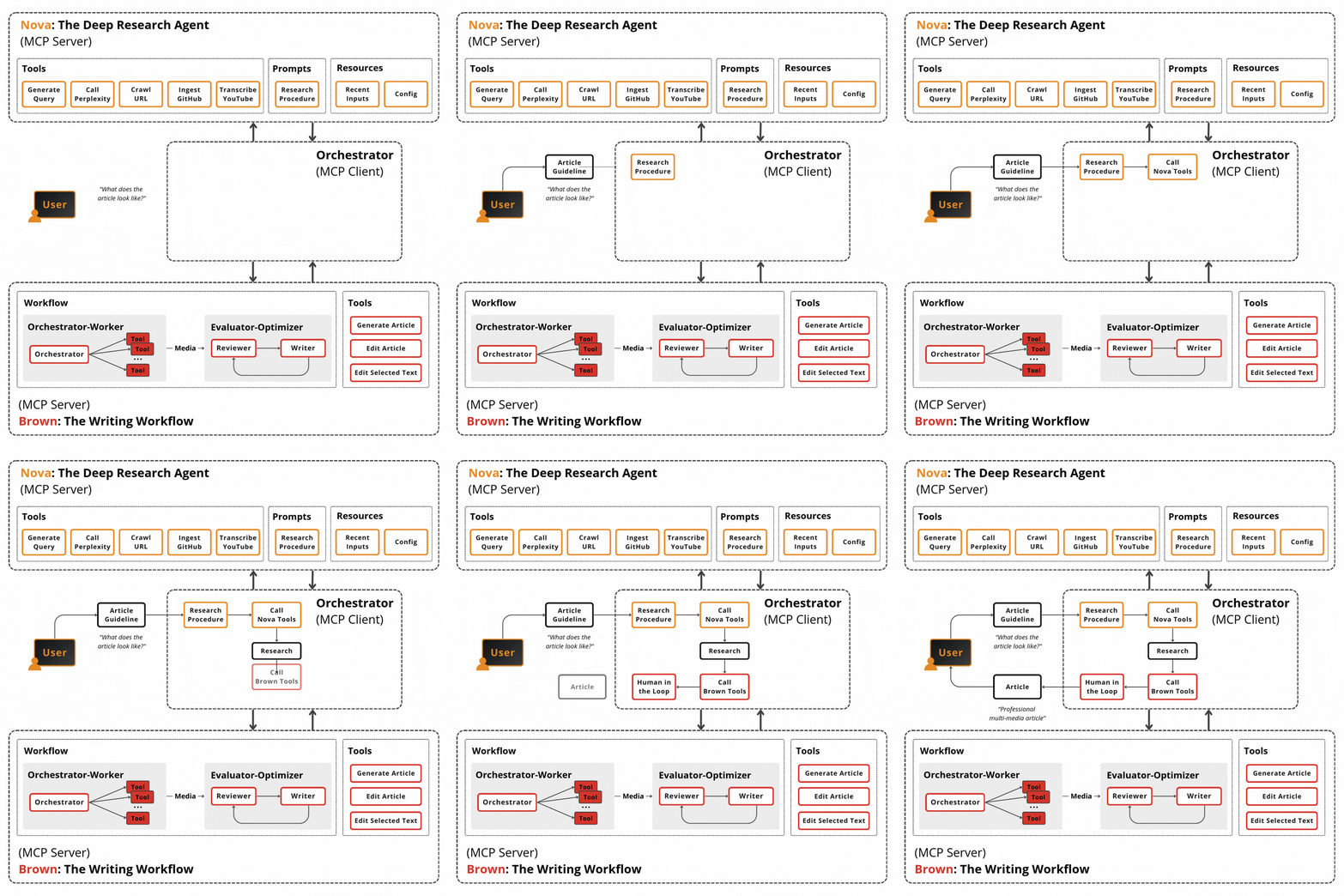
The twist: we used Nova and Brown to write the course itself. Every lesson went through the same AI system we were teaching students to build. If something broke, we fixed it. Not for a demo, but because we needed it to work. That pressure forced us to build something production-ready, not just classroom-ready.
Nova and Brown are two MCP servers that can be orchestrated within a multi-agent system through Cursor, Claude Code, or any custom orchestrator. We created an AI system that writes about itself.
What You Get
34 lessons that take you from foundations to deploying your own agent through articles, videos, and hands-on Notebooks. You will learn tool calling, ReAct loops, context engineering, structured generation, memory systems, RAG, planning and reasoning architectures, human-in-the-loop feedback, and CI/CD deployment:
Self-paced with monthly live kick-off sessions so you can go at your own speed without losing momentum.
4 parts: Foundations (multiple smaller projects), two end-to-end complex projects, LLMOps (evaluation, observability, auth, deployment), and a final capstone project you implement yourself.
Real code, not notebook-only demos. The teaching happens through Notebooks, but the code is structured as two Python modules (Nova and Brown). You import from the modules into Notebooks for a structured learning experience.
Fundamentals over frameworks. We wrote as much as possible from scratch because tools change constantly. The course focuses on design principles and patterns you can replicate in any tool. Key tools used: LangGraph, LangChain, Gemini, FastMCP, Cursor/Claude Code, Opik, Perplexity, and GCP.
Discord community with Q&A support and a completion certificate.

Who Is This For?
Engineers who want to go deep on AI agents, not skim the surface. If you are a software engineer, ML engineer, or data scientist who has played with LLMs but never built a multi-step agent that actually works in production, this is for you.
You should be comfortable with Python, have basic familiarity with LLMs, Docker, and cloud. And above all: a builder mindset.
Early-bird pricing: $449 for lifetime access — limited to the first 100 seats!
💡 Not sure yet? We open-sourced the code on GitHub and made the first 6 lessons free.
What Students Are Saying
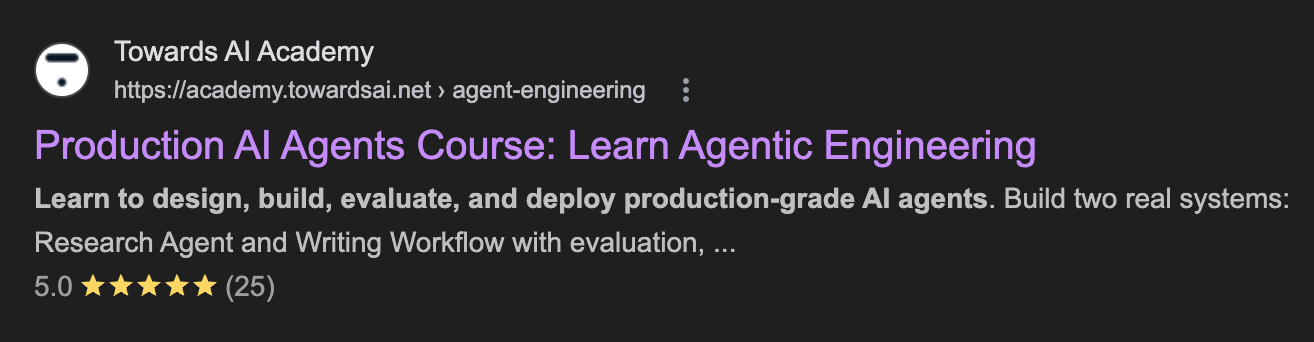
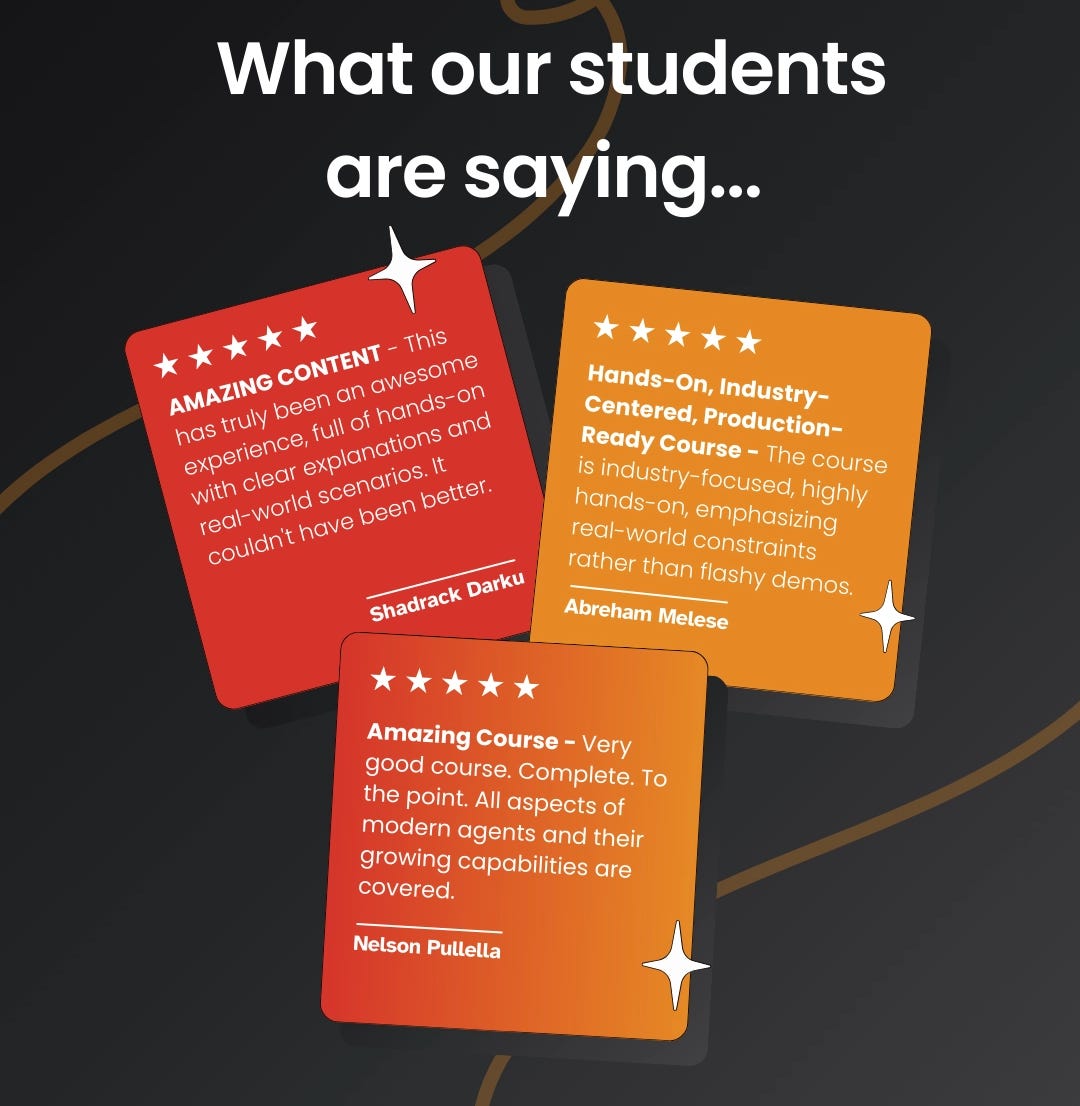
We sold 150 pre-release slots to build the course with a real audience. The result: 25 five-star reviews. Not from our own biased impression, but from students who went through the material.
As one reviewer put it: “goes far beyond theory, providing deep, practical experience” with real-world constraints rather than flashy demos.
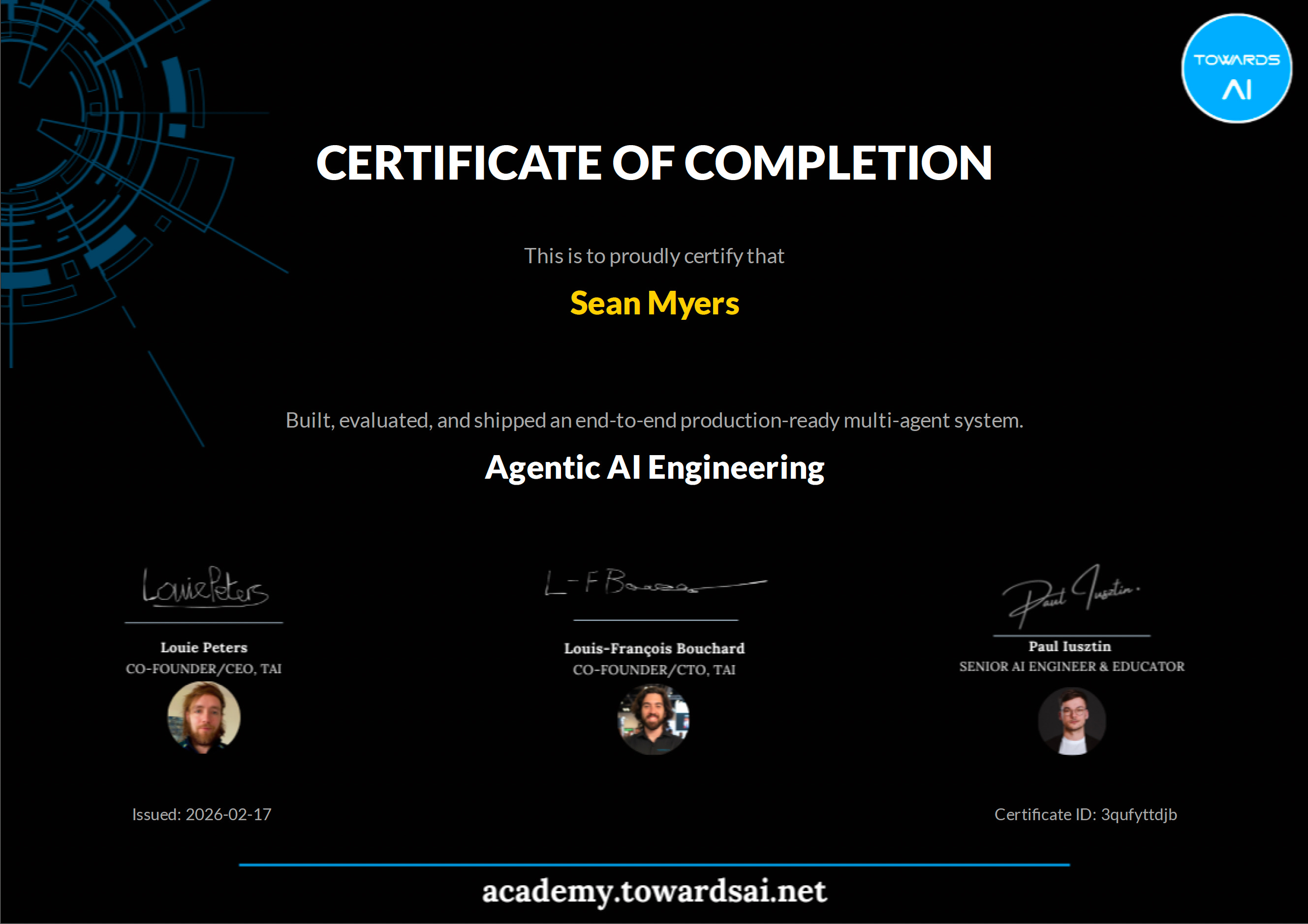
Sean Myers, Principal Analyst at Columbia, already earned the first completion certificate:
Here you can learn more:
Paid Subscribers
For paid subscribers, we are offering 20% off. For the discount code, DM me on Substack or comment on this post.
We will soon create a paid subscribers’ perks page with more offers. But for now, let’s keep it simple.
Looking forward to your feedback on the course and seeing you next Tuesday!
Paul
Excited and glad to be working in this with you Paul!